

1. What is Senior Colocation?
Senior colocation is simply living with others, often after the age of 60, in a shared accommodation. Each person has their private room, but the kitchen, living room, and sometimes the bathroom are shared common areas. Rent and expenses are shared among the roommates, allowing for savings of up to €500 each month.
It is not just a default solution; it is a real lifestyle choice found in various forms in France. Regardless of the model chosen, the goal remains the same: to no longer age alone and to find meaning in everyday life.
The Main Types of Senior Colocation
Affinity Colocation Among Seniors
Retirees rent a place together and set their own living rules. Very common in Paris and large cities, it allows for rent to be divided by two or three.
Intergenerational Colocation
A senior shares their home with a student or young professional in exchange for reduced rent and a reassuring presence daily.
Shared Houses / Inclusive Housing
Housing supervised by associations or communities, with private spaces, common areas, and sometimes a coordinator to ensure a secure environment.
2. The Benefits of Colocation for Seniors
Choosing senior colocation after retirement can be an interesting solution. It allows sharing a home with others of the same age, avoiding the loneliness often felt at this stage of life. Senior colocation also offers the possibility to save on housing budget and expenses. Living together creates a more convivial environment where exchanges and mutual aid are natural. It is a simple way to stay socially active while maintaining autonomy. For many, it is a way to approach this new stage with more serenity. The benefits are numerous and measurable.
A 2023 INSEE study reveals that seniors in colocation feel 40% more satisfaction in their lives than those who live alone.
1. Breaking Solitude and Creating Social Bonds
The isolation of elderly people is a significant public health issue. Senior colocation offers daily presence that provides comfort. Practically, it involves sharing meals and chatting, playing cards, watching movies together, discussing current events and memories, welcoming friends or family. This presence helps combat isolation, improves morale, and reduces the risk of depression in the elderly.
2. Achieving Significant Savings
Budget is often the main reason for choosing senior colocation.
Average savings observed:
Rent can be divided by 2 or 3 depending on how you organize your accommodation. Expenses, electricity, heating, internet, group grocery shopping allow for purchases among several families or neighbors, helping to reduce costs and time spent shopping. By organizing this way, delivery fees are shared, and frequent trips are avoided. This makes supply easier, especially for those with busy schedules or living in areas where stores are far away.
This system also encourages trust and cooperation among participants. Shared housekeeping services allow for the sharing of home maintenance services among several people. This makes organization simpler and more economical while maintaining a good level of help for each person. This solution facilitates the daily management of tasks and promotes a better distribution of time spent on cleaning. Shared subscriptions, like those for Netflix or newspapers, have become a common practice to reduce costs. Many people choose to group together to enjoy services without each paying a full subscription. This allows access to more content while spending less. It's a simple and effective way to stay informed or entertained without breaking the bank.
On average, senior colocation allows for 30 to 40% savings compared to individual housing.

3. More Security in Daily Life
In case of a fall, illness, or medical emergency, a roommate can react immediately and call for help. This reassuring mutual aid often delays entry into a nursing home. Security is ensured at all times with a 24/7 presence to intervene in case of a problem. Assistance is also provided for complicated trips. Medical treatments are closely monitored in collaboration, and relatives are quickly alerted if a situation requires it.
4. Sharing Tasks and Mutual Aid
Each person participates according to their physical abilities and skills. This complementarity makes everyday life easier and highlights each roommate's qualities. The typical distribution in a house can take different forms depending on each person's preferences. For example, cooking often goes to the one who enjoys it, while gardening benefits the one with a green thumb. Cleaning can be done in rotation each week, shopping is done in turns or sometimes together, and DIY depends on each person's skills.

3. The Drawbacks: Anticipate to Live Better Together
Senior colocation is not magical and requires a minimum of preparation and adaptation.
The main possible difficulties:
- Less privacy in common areas. Sharing the living room and kitchen means giving up some total privacy.
- Different lifestyles. Some wake up early, others go to bed late. Eating habits may differ.
- Progressive loss of autonomy. If a roommate becomes dependent, it can disrupt the balance of the colocation.
How to avoid problems?
- Draft a common living charter defining the rules: quiet hours, guest management, task distribution, presence of animals.
- Respect each other's private space. The personal room should remain a sanctuary where everyone can retreat.
- Clarify money management. Use an app like Homebro to track shared expenses and avoid financial misunderstandings.
- Communicate regularly. Organize monthly meetings to adjust rules if necessary.
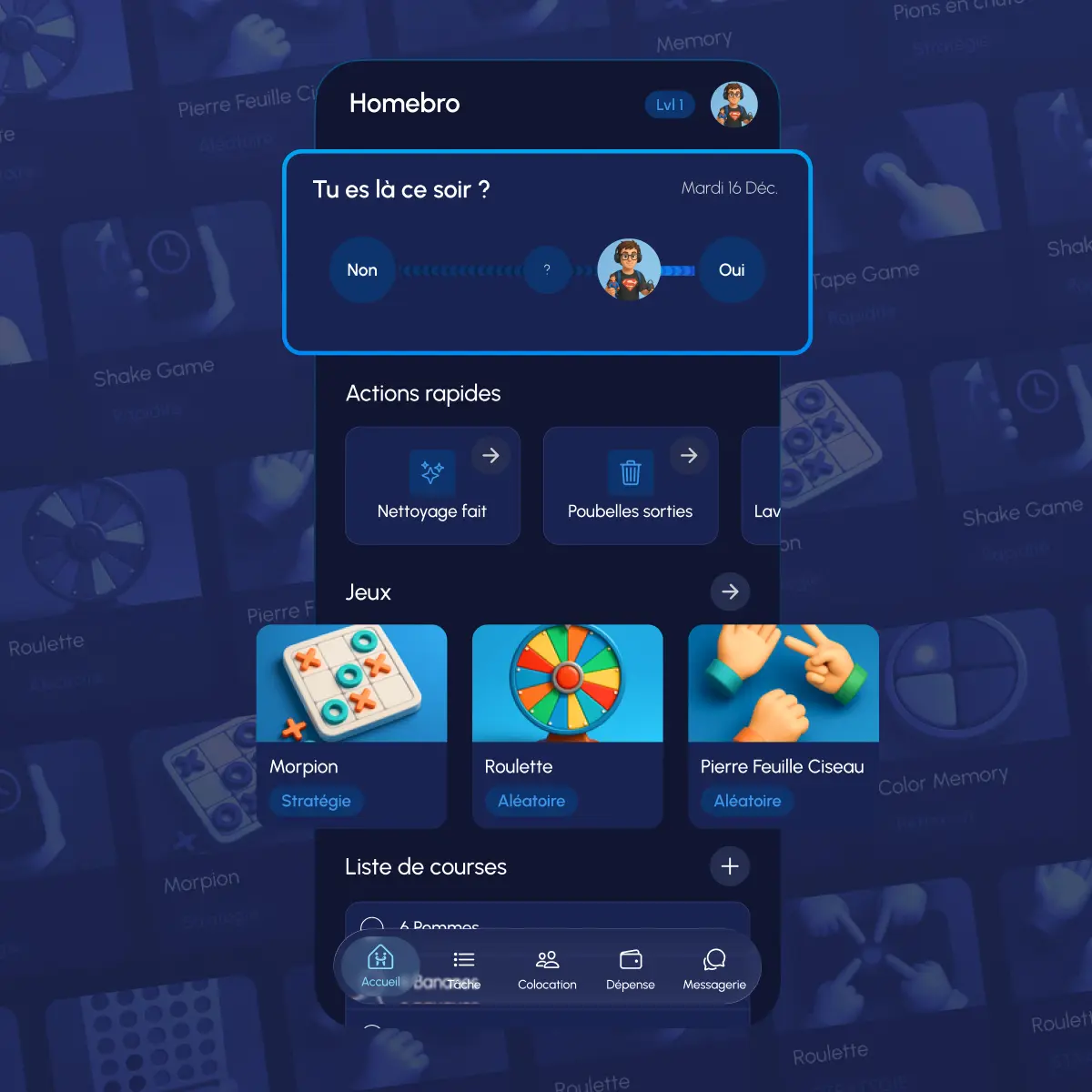
Download Homebro and simplify your roommate
Reminders, planning, tasks and expenses — all in one place.
4. How to Organize a Senior Colocation?
1. The Lease
- Single lease (joint): All roommates sign together. If one leaves, the others must pay their share. Risky for seniors.
- Individual leases (recommended): Each roommate signs their own lease. Each is only responsible for their share of the rent. The most secure solution in senior colocation.
2. Financial Aid
Good news: social benefits are retained in senior colocation.
- APL (Personalized Housing Assistance): Calculated individually for each roommate according to their income. No penalty for colocation.
- APA (Personalized Autonomy Allowance): Maintained to finance home help even in colocation.
- ASH (Social Housing Assistance): Possible in some inclusive housing recognized by the department.
- ASPA (minimum old age): Continues to be paid normally.

3. Finding the Right People
This is the key element to the success of a senior colocation. Take the necessary time.
Questions to address during meetings: What is your daily rhythm of life? What are your eating habits? Do you smoke? Do you accept pets? Do you like having guests? What are your important values? How do you handle conflicts?
Where to find senior roommates? Specialized platforms (SeniorEnColoc.fr, Cohebergement.com), town halls and CCAS, local associations and senior clubs, word of mouth in friendly networks, local press classifieds.
4. Where to Find Suitable Housing?
Senior colocation Paris: The peripheral districts (13th, 19th, 20th) offer more affordable housing. Count 600-900€/room.
Other major cities: Lyon, Marseille, Bordeaux, Toulouse offer senior colocations at 400-700€/room.
Ideal housing criteria: single-story or elevator, adapted bathroom (walk-in shower), proximity to transport and shops, 3-4 bedrooms minimum to preserve privacy.

5. Senior Colocation Paris: Specificities of the Capital
Senior colocation Paris is experiencing particular growth due to the high rents in the capital.
Popular neighborhoods for senior colocation in Paris:
- 13th arrondissement: quiet residential neighborhoods, well-served
- 19th and 20th: more affordable, green spaces (Buttes-Chaumont)
- Near suburbs: Montreuil, Ivry-sur-Seine offer larger housing
Average rents in senior colocation Paris:
- Room 15-20m²: 650-900€/month including charges
- Equivalent studio alone: 1200-1600€/month
Average savings: 500-700€/month thanks to senior colocation in Paris.
Parisian resources: CLIC Paris (Local Information and Coordination Center for the Elderly), district town halls, Paris Habitat for social housing.
6. Senior Colocation vs Service Residence vs Nursing Home
Verdict: Senior colocation is the most economical and convivial solution for autonomous or semi-autonomous individuals.
| Criterion | Senior Colocation | Service Residence | Nursing Home |
|---|---|---|---|
| Average Cost | 400–800 € | 1200–2500 € | 2000–5000 € |
| Social Connection | Very strong | Medium | Variable |
| Independence | Total | High | Low |
| Security | Mutual aid | Staff present | Medicalized |
| Aid Maintained | Yes (APL, APA) | Yes | Yes |
| Conviviality | Daily chosen | Proposed activities | Variable |
7. FAQ on Senior Colocation
Less loneliness thanks to daily presence, significant savings (30-40% on average on rent and expenses or €500/month), enhanced sense of security in case of health problems, and sharing of daily tasks.
8. Conclusion
Senior colocation offers a humane, economical solution that allows for good living, compared to nursing homes or being alone at home. Whether in Paris, Lyon, Marseille, or elsewhere in France, more and more retirees are choosing to age together rather than facing this stage of life alone. The benefits are clear: Saving an average of €500 per month on the housing budget is an idea that speaks to many.
It is often the most significant part of expenses, and finding simple solutions can really ease finances. Whether by reducing certain charges, changing housing, or negotiating rent, these savings can make a real difference in daily life.
To better organize your daily life in colocation, also discover our complete guide with a downloadable model: Free colocation planning (2026).