What the Move-Out Inspection Really Judges
At the move-out inspection, they're not judging your worth as a human being. They're mostly judging a very simple thing: is the property returned 'normally' clean, and are there damages beyond normal wear and tear.
The frustrating part is that the line between 'normal wear' and 'not well maintained' isn't always perceived the same by everyone. Where you see a mark that will come off 'at the next cleaning,' the other person might see 'a job to be done,' hence a potential deduction.
The most profitable strategy isn't to scrub everywhere randomly. It's to understand what most people look at first: shiny surfaces (or not), odors, forgotten corners, and anything that gives the impression of neglect. It's largely a matter of perception. And the good news is, you can control it.
Little Secret
A 'normal' micro-scratch is more easily forgiven than a dirty sink, a greasy oven, or a limescale-covered bathroom. What looks like 'unmaintained' triggers more deductions than what looks like wear.
The Golden Rule: Clean in the Right Order
End-of-lease cleaning becomes hellish when done incorrectly. The classic trap is to clean the floor, then dust a shelf, then go back to the floor, then clean the bathroom... and in the end, you've worked a long time but feel like nothing is really 'finished.'
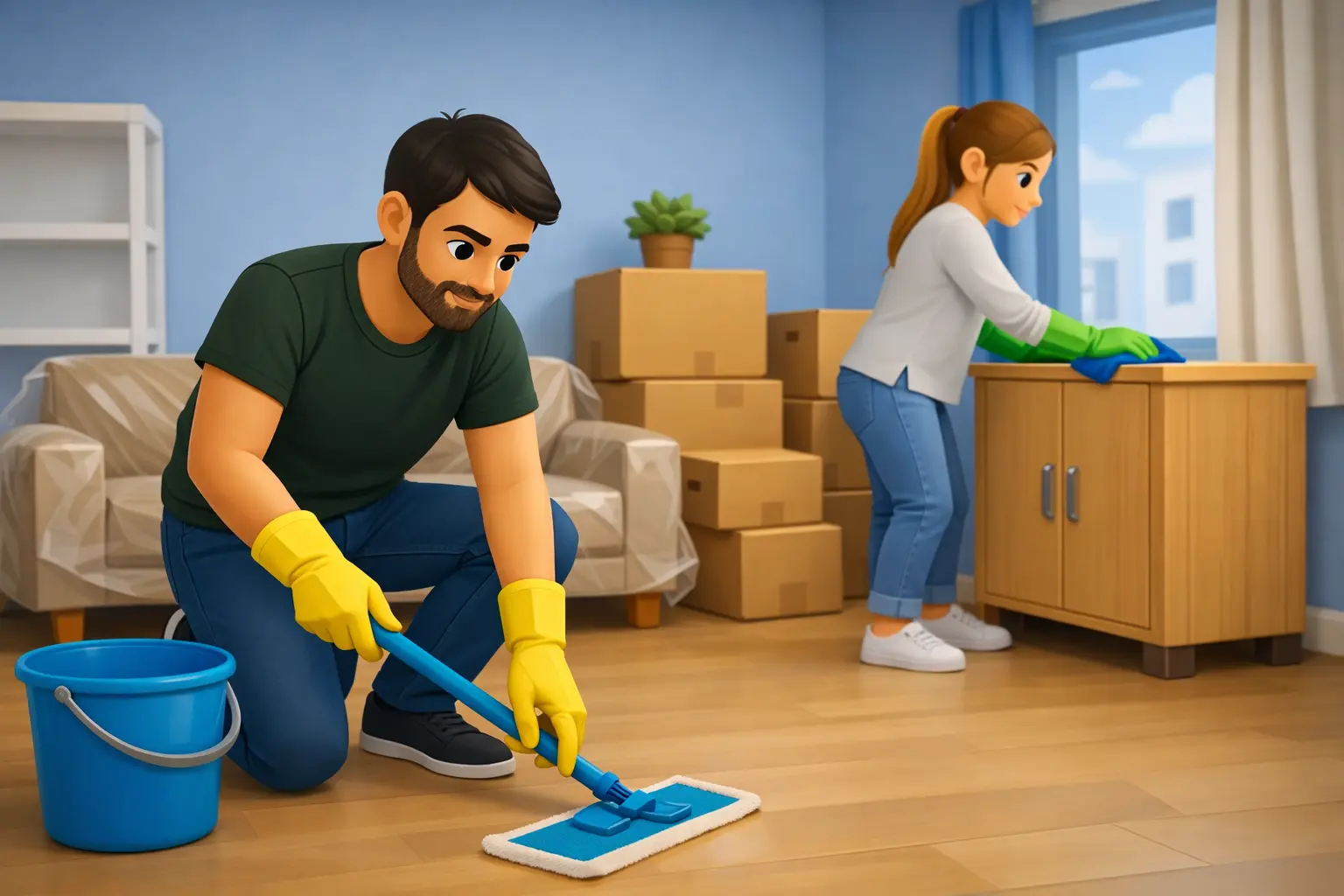
The order that saves you is this: start by clearing and tidying, then do everything that falls (dust, crumbs, hair), then tackle the surfaces, and only at the end do the floors. This prevents dirtying what you've just cleaned and gives you visible progress room by room.
And if you really want to simplify your life: keep a 'logistics base' room (often the entryway or living room), with your products, bags, cloths. This avoids unnecessary back-and-forths and losing your energy in chaos.
Kitchen: Where Deposits Die
The kitchen is the most profitable area to make spotless, because it's also the one that triggers the most 'it wasn't done.' And often, it's not the entire kitchen: it's three or four specific points.
The first is the oven. Even if you 'don't cook that much,' it accumulates a greasy film that's immediately noticeable when you open the door. An oven that looks clean instantly gives the impression of a well-maintained home. The second is the hood and filters: when they're sticky, they tell a story, and it's not the right one. The third is the fridge, especially the seals and trays: it's where odors are born and where people unconsciously put their noses. Finally, there's the sink and faucet, because limescale and water marks leave a 'dirty' effect even when the rest is OK.
A very simple tip: at the end, turn off the kitchen light and turn it back on. This mini 'visual reset' allows you to spot marks your brain no longer sees after an hour of cleaning. And take 30 seconds to look at the kitchen as if you were visiting it for the first time. You'll immediately see what's wrong.
Bathroom: Limescale, Seals, and Unpleasant Surprises
The bathroom is the kingdom of limescale and details that waste money for nothing. And it's also the place where 'clean' doesn't mean much: what we're looking for is the neat, white, mark-free side.
The most important duo here is the shower (or bathtub) and the sink. In the shower, it's often the walls, faucets, and especially the seals. Graying seals give the impression that everything is old, even if it's just dirt buildup. The sink follows the same logic: if the siphon, drain, or faucet are dull, the room seems less clean than it is.
And there's one point that surprises many people: the vents. A dusty ventilation grille can raise eyebrows because it's visible and smells of neglect. It's not hard to do, just very easy to forget.
Living Room and Bedroom: The Dust That Betrays
The living room and bedroom are rarely the main subject of a deduction... unless they tell a story of dust. And dust is tricky because you no longer see it when you live in it.
What makes the difference here isn't spending two hours on the same shelf. It's thinking about places 'at eye level' and areas where dust accumulates without realizing it: baseboards, window sills, tops of doors, corners behind furniture, radiators. If you do these spots, the home immediately seems more cared for.
Another point: marks on the walls. No need to repaint for every little scuff, but some marks come off very well with gentle cleaning. The goal isn't to erase normal wear, it's to remove what looks like a recent and avoidable stain.
Entryway, Windows, Balconies: The Forgotten Zones
The entryway sets the tone. If it's neat, you start with a huge psychological advantage. If it's full of dust, shoes, and floor marks, you can be sure the person will look at the rest more critically.
Windows are the same: no one expects showroom perfection, but very marked windows or window tracks filled with dirt immediately suggest 'work to be done.' And if you have a balcony or terrace, same logic: a quick clean is often enough, but forgetting it gives the impression that the home was returned halfway.
The real common point of these areas: they're easy to do, and they quickly look 'professional' when clean. So they have an excellent return on investment.

Download Homebro and simplify your roommate
Reminders, planning, tasks and expenses — all in one place.
The Extreme Cleaning Kit (Without Scams)
No need for ten products. Just the essentials, and especially the right tools to save time.
Simple Essentials
A good kitchen degreaser, a limescale remover, dishwashing liquid, baking soda, microfiber cloths, an old toothbrush.
Tools That Change Everything
A shower squeegee, a non-abrasive scouring sponge, a decent vacuum cleaner, and a bucket with an effective mop.
Time-Saving Option
If you can: a steam cleaner can help, but it's not mandatory. Order and method do more than the gadget.
To Avoid
Hazardous mixtures and overly aggressive products on fragile surfaces. Better soft + regular than strong + damage.
The Final: Proofs, Photos, and Mental Check
When you're done, resist the urge to run away. The last quarter-hour can literally save you a deduction. Ventilate, take a final tour in natural light if possible, and look at the rooms as if you were a stranger visiting.
Then, take clean and clear photos. Not to 'attack' anyone, but because it avoids vague debates. A photo of a clean oven, a neat shower, an empty fridge, clean floors, changes the dynamic if a point becomes debatable.
And above all, keep in mind that the goal isn't 'perfect.' The goal is 'no obvious reason to withhold money.' Your cleaning should remove easy arguments. That's extreme cleaning.
The Homebro Bonus
When you're in departure mode, your brain is already occupied with a thousand things. Ideally, have a clear list, shared if there are several of you, with a logical order and tasks to check off.
Even without overdoing it, just laying everything out and following a plan prevents silly oversights. And silly oversights are often the ones that cost the most.
Conclusion
Getting your deposit back 100% isn't magic. It's a fairly simple combination: prioritize what is seen and smelled, clean in an intelligent order, and don't forget 'sneaky' areas like seals, filters, vents, and window tracks.
If you do a decent cleaning everywhere and a spotless cleaning on sensitive points (kitchen, bathroom, floors), you maximize your chances without exhausting yourself. And along the way, you give yourself a gift: you leave with a lighter mind, without the feeling of having left a battlefield behind you.