
1. Specifics of Property Management in Shared Housing
Shared housing involves multiple tenants in the same property, complicating day-to-day and technical management. Unlike traditional rentals, the landlord or property manager must handle multiple contracts or a single lease with a solidarity clause among roommates.
The type of lease chosen directly impacts administrative management. A single shared housing lease simplifies tracking but binds all occupants jointly. Individual contracts protect each roommate but increase the paperwork.
The move-in and move-out inspections require careful monitoring. Repairs and maintenance must be fairly allocated among tenants, requiring expertise and time. Managing the relationship between roommates influences the shared housing experience and lease duration.
Investing in shared housing offers better profitability than traditional rentals, especially in Paris, Lyon, or Aix. The annual rent can be 20 to 30% higher but involves higher property management fees.
2. Property Management Fees: Rates and Services
The total cost of shared housing property management varies depending on the management method:
Real estate agency mandates: Agencies typically offer a management mandate between 7% and 10% of the monthly rent (including charges). For a Parisian shared housing at 2,000€/month, expect 140 to 200€/month in fees. Included services cover lease drafting, tenant search through ad distribution, virtual tours, rent receipt tracking, unpaid rent management with insurance, and legal support according to the Alur law.
Dedicated manager: Some real estate agencies offer a personal property manager ensuring real-time monitoring. This service increases the rate by 2 to 3% but provides optimal peace of mind and availability.
Digital solutions: Management platforms or apps offer competitive prices (3 to 5% of the rent) with less personalized support. The choice depends on your experience in rental property investment and your need for day-to-day management.
For an apartment generating 24,000€ in annual rent, fees range from 720€ (online management) to 2,400€ (premium agency). Compare this to the time saved and the quality of professional service.

3. Drafting the Shared Housing Lease
The lease contract structures all shared housing property management. Two main options exist.
Mandatory mentions: The name of the roommate (or all if a single lease), the individual rent amount, charge distribution, security deposit (one per tenant or pooled depending on the lease type), precise property description with detailed inventory. The solidarity clause is the central legal element of the shared housing lease. Upon signing, all agree to be guarantors. In case of departure, solidarity continues for a limited time according to the law.
Each tenant provides a guarantor (parents for student shared housing) and subscribes to home insurance. The landlord checks these documents and compiles the complete file before handing over the keys.
Single lease with solidarity clause
All roommates sign the same contract and are jointly responsible for paying the rent. If a tenant leaves or does not pay, the others cover their share. This type of lease simplifies administrative management but can create conflicts.
Individual rental contracts
Each roommate signs a separate lease for their room and a share of the common areas. This solution protects each party but complicates implementation. The lease duration remains the same (3 years for unfurnished, 1 year for furnished).
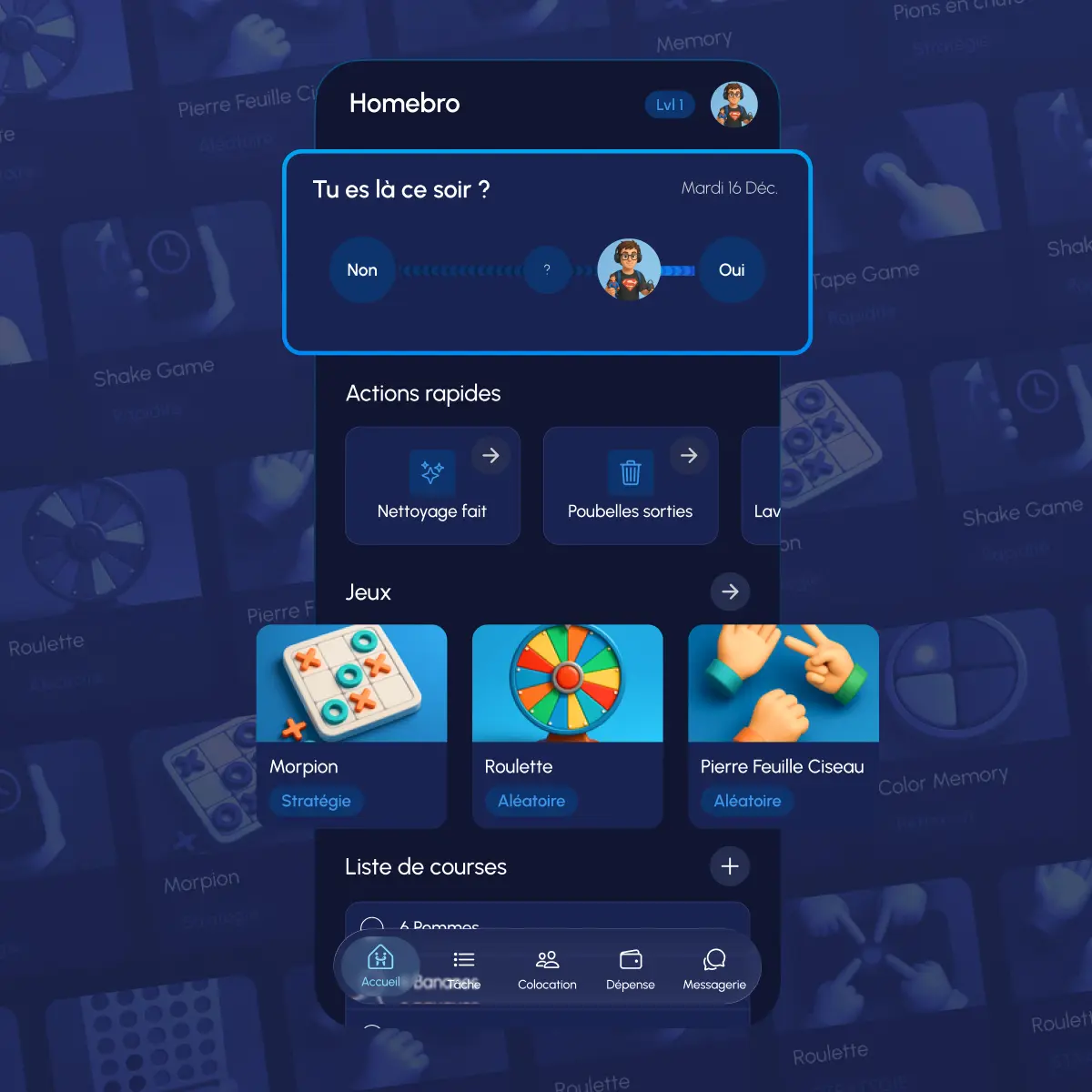
Download Homebro and simplify your roommate
Reminders, planning, tasks and expenses — all in one place.
4. Effective Roommate Search
The selection of tenants determines 80% of the success of your investment.
Ad distribution
Post on specialized networks (student shared housing platforms near universities, real estate sites, local groups). A clear ad with quality photos and a virtual tour triples the contacts.
Candidate profile
For a shared housing in Paris in the 5th arrondissement near the Paris-Sorbonne University, prioritize Master's students or young professionals on permanent contracts. Always ask for: pay slips, previous due notice, guarantor proof, ID.
Organizing visits
Schedule group slots to observe compatibility between candidates. A good initial contact reduces the risk of future conflicts. Some landlords organize preliminary meetings between future roommates.
Online personal space
On your management platform (agency or app), create individual access allowing each tenant to view their receipts, report a problem, contact the manager. This transparency improves relationship management.
The Paris rental market remains tight: a well-located property in a student area rents in 10-15 days. In Lyon or Aix, expect 15-20 days on average.

5. Managing Conflicts Between Roommates
Even with the best profiles, tensions can arise in shared housing life.
Prevention: Include clear rules in the lease or an internal regulation: quiet hours, task rotation, invitation procedures, procedure in case of early departure. This document prevents 70% of conflicts.
Active mediation: In case of a declared conflict, the manager or landlord intervenes quickly. Organize a meeting (real-time video or physical) to find an amicable solution. Most tensions are resolved through communication.
Ultimate solutions: If harmony remains impossible, facilitate the departure of the problematic roommate (active search for a replacement, easing the notice period). Keeping a toxic occupant costs more in damages than a temporary vacancy period.
Technical management applications integrate dedicated communication spaces, shared task tracking, automatic charge distribution. These tools reduce conflict sources by 60% according to property management experts.
Common Problems
Unequal distribution of household chores, noise disturbances, unpaid bills (electricity, internet), excessive use of common areas, too frequent guests.
6. Technical Management and Maintenance
The day-to-day management of shared housing involves more intensive maintenance than simple rentals.
Frequent interventions
Plumbing repairs (intensive bathroom use), appliance replacement (fridge, washing machine under demand), painting work between rentals.
Annual budget
Allocate 5 to 8% of the annual rent for maintenance. For a shared housing generating 24,000€/year, set aside 1,200 to 1,900€ for repairs and compliance.
Regular inspections
Beyond mandatory move-in and move-out inspections, organize a check every 6 months. This detects early damages and assigns responsibilities before a roommate's departure.
Mandatory diagnostics
When renting, perform all diagnostics (DPE, asbestos, lead, electricity, gas). In co-ownership, check specific rules in the regulations.
Download Homebro and simplify your roommate
Reminders, planning, tasks and expenses — all in one place.
Homebro's Advice
Build a network of professionals (plumber, electrician, painter) to intervene within 24-48 hours. A short delay improves tenant satisfaction and prevents worsening of damages.
7. Advantages of Shared Housing
Investing in shared housing offers several benefits, but the community lifestyle is increasingly appealing: cost-sharing, social life, flexibility. This model meets the expectations of younger generations.
Higher profitability
The yield reaches 4 to 6% in university towns, compared to 2.5 to 4% in traditional rentals. In Paris, a 4-bedroom shared housing in the 11th arrondissement generates 3,000€/month compared to 2,200€ in a family rental.
Reduced vacancy
The demand for student shared housing remains high year-round, especially in areas near schools (Latin Quarter, Montparnasse, Lyon Part-Dieu, Aix center). A well-located property rents in 15 days.
Risk diversification
With multiple roommates, the risk of total non-payment decreases. If one occupant faces difficulties, the others continue to pay their share (joint lease) or their rent (separate leases).
Property value increase
An apartment optimized for shared housing (equivalent rooms, two bathrooms, spacious common areas) sells for more, as the potential rental market is expanded.
8. Management Software and Tools
Management is simplified with the right tools:
Complete platforms: Solutions manage ad distribution, candidate selection, automatic lease drafting, rent collection, receipt sending, accounting tracking, tax declaration assistance. Expect 15 to 40€/month depending on features.
Applications for roommates: Homebro, a leader in France, allows occupants to manage shared expenses, plan tasks, centralize documents. The landlord can monitor daily life and anticipate problems. Free solution for users.
Professional property management software: Multi-property investors opt for professional tools (Rentila, Gererseul). These software allow multi-property tracking, automatic due notice generation, profitability calculation, tax optimization.
Comparison: Managing directly with a tool costs 20 to 50€/month compared to 7 to 10% of the rent via an agency. For 2,000€/month, save 1,560 to 2,280€/year in direct management, but assume 3-5h/month of work.
Expert advice: Start with an agency for your first rental investment to gain experience, then switch to direct management assisted by software.
9. Specific Legal Aspects
Shared housing falls within a specific legal framework:
Alur Law: Since 2014, it strictly regulates shared housing. It requires the mention "shared housing" in all documents (lease, ad, rent receipt), defines solidarity rules, protects tenants in case of departure.
Primary residence: The rented property must be the primary residence of the occupants. Unauthorized subletting is prohibited and results in lease termination.
Rent control: In Paris, Lyon, and certain cities, the rent amount is capped. Check reference rents by neighborhood and district to stay legal.
Access to housing: The landlord cannot refuse a candidate based on discriminatory criteria. Selection is based on income, guarantees, and rental project.
Professional card: If you go through a real estate agency, check that it has a valid professional card. It's a legal guarantee for your real estate investment.
10. Optimize Profitability
Some strategies maximize yield:
Geographic targeting
Prioritize student neighborhoods (Paris-Sorbonne University, Sciences Po, major schools in Lyon), areas well-served by transport, districts undergoing gentrification where rental property prices remain affordable.
Optimal number
3 to 4 roommates represent the best profitability/management balance. Beyond that, conflicts increase. Below, the gain does not justify the effort versus simple rental.
Equipment
Invest in robust furniture, professional appliances, fiber connection. These amenities justify a higher rent and reduce turnover.
Additional services
Offer monthly common area maintenance (cleaning 2h/week), parcel concierge, or gym in co-ownership. These additional services increase rent by 5 to 10%.
Responsiveness
An available landlord (response within 24h) retains good roommates who renew. The cost of re-commercialization (15 days lost rent + ad fees) disappears with low turnover.
Conclusion
Managing a shared housing property requires organization, appropriate tools, and understanding of the challenges. By mastering the drafting of the shared housing lease, choosing the right management mode (real estate agency, dedicated manager, direct management via software), and anticipating conflicts, you turn this investment into regular income.
Property management fees, from 3% (tool) or 10% (agency), constitute a profitable investment. The essential: choose compatible roommates, establish clear rules from the start, maintain rigorous day-to-day management.
With the right shared housing advice and technical management tools, managing a shared housing becomes as simple as traditional renting, with 20 to 30% higher profitability. The future of rental investment lies in this growing lifestyle.
FAQ - Shared Housing Property Management
To manage a shared housing effectively, master several aspects of property management:
Day-to-day management: Establish a rent collection calendar with automatic receipt sending on the 1st. Use property management software to automate administrative tasks.
Technical management: Schedule quarterly maintenance visits. Respond quickly to repairs (plumbing, electricity) to prevent worsening and maintain tenant satisfaction.
Shared housing tips: Create an internal regulation specifying common living rules (quiet hours, kitchen, guests, tasks). This document prevents 70% of potential conflicts.
Personalized follow-up: Organize a monthly meeting with roommates to gather feedback, anticipate problems, maintain a good atmosphere. This relationship management is key to rental longevity.
Digital tools: Adopt a shared management app (Homebro) allowing occupants to manage shared expenses, report problems, communicate. The landlord monitors shared housing life in real-time.