

First of all: clarify the date and rules
Stress often comes from uncertainty. So first step: make things clear, calmly, in black and white.
To do as soon as the departure is announced:
- The exact departure date (and if possible a margin: "no later than…").
- Is the person leaving at the end of the month (convenient for rent/charges)?
- Who is responsible for what until departure: cleaning, groceries, trash, etc.
A little tip: even if you're friends, send a recap message in your group (or a shared note). It avoids the famous "oh, I thought that…"
The administrative checklist (lease, deposit, inventory)
It's the least fun part, but the one that avoids big problems.
Lease: what situation?
Single lease (everyone on it) or individual leases? It changes everything. Reread the lease and check the solidarity clause.
Security deposit
Who paid what? Often, the new one replaces the old one by buying their share (in writing). Avoid vague promises.
Charges and subscriptions
Electricity, internet, home insurance: note who pays, how we reimburse, and when we change the name.
Inventory / room condition
Take photos (date visible if possible) + a mini inventory: it protects everyone.
Tip: a simple written note is worth gold
No need for a novel: a signed message / email where you note:
- departure date
- amount of the deposit share to be refunded (and by whom)
- what remains due (charges, groceries, etc.)
It avoids discussions 3 months later.
Finding a replacement: ad, sorting, visits
The idea is to recruit quickly without recruiting randomly.
Create an ad that attracts (and filters)
Include: neighborhood + rent + charges (clear), area + furnished/unfurnished, atmosphere (rather calm / rather lively), important rules (smokers? pets? hours?)
The more precise you are, the less time you waste on unnecessary messages.
Prepare 5 fixed questions
Examples: lifestyle (remote work? outings?), budget and professional/study situation, experience in shared housing, expectations on cleaning / communal life, possible move-in date
Visits: avoid the "by feeling" trap
Feeling matters, but keep a framework: 15–20 minutes, same questions, and take notes right after (otherwise everything gets mixed up).
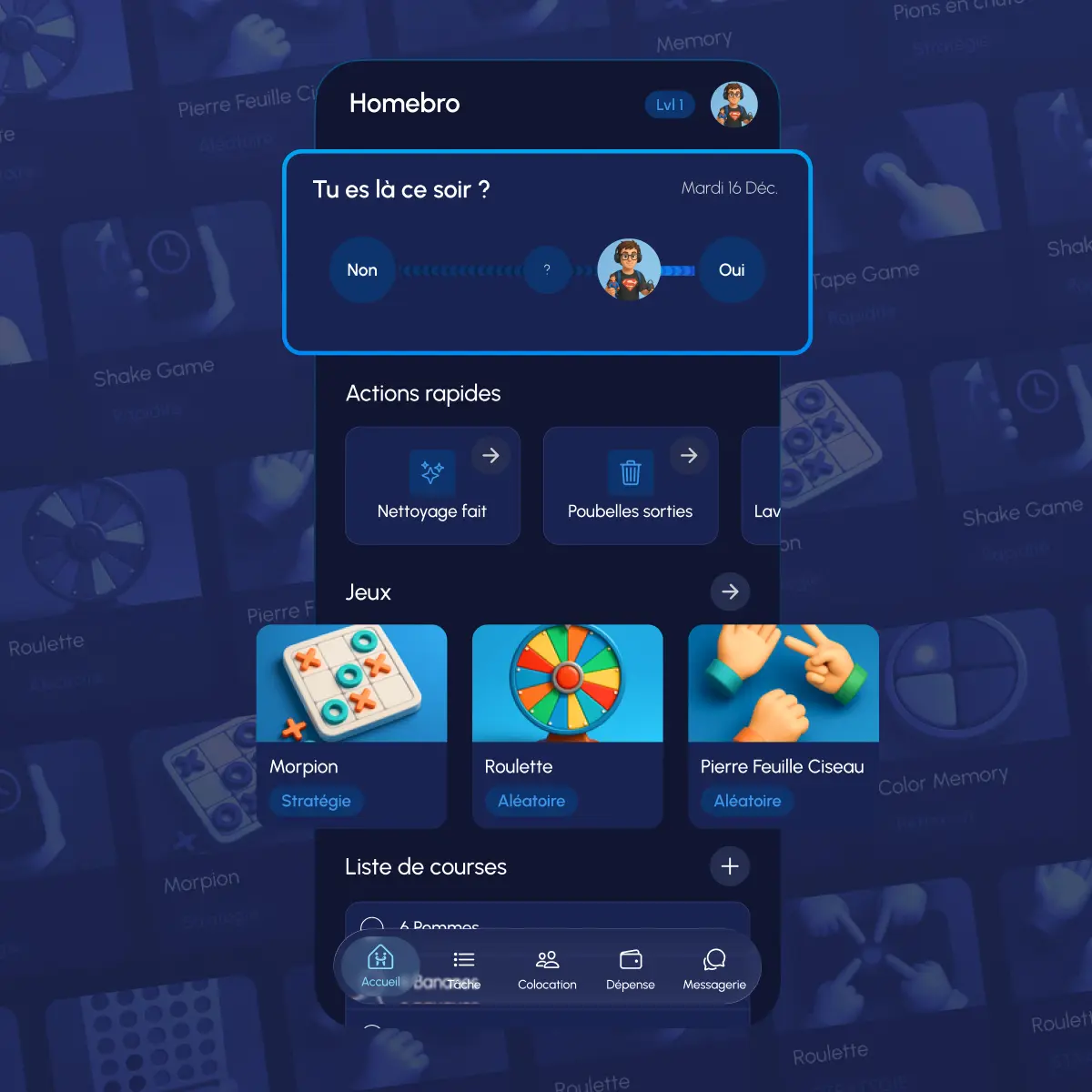
Download Homebro and simplify your roommate
Reminders, planning, tasks and expenses — all in one place.
Choosing without making mistakes (and without endless debate)
The choice can quickly become a mini internal politics: "I have a good feeling about them" vs "I don't at all."
Two simple methods:
- Vote + veto right: everyone votes, but if someone has a real alert (behavior, inconsistency, lack of respect), veto.
- Criteria grid (ultra effective): rate on 10: respect, stability, rhythm compatibility, budget clarity, communication.
And keep in mind one rule: a good roommate is someone reliable and respectful before being "super nice."
Red flags
Without judging, some signals should slow you down: refuses to answer about budget / date / situation, arrives late without warning + no excuse, already criticizes your rules ("but I do what I want"), wants to move in without any papers / without discussion.
It doesn't mean "bad person," just "risk of trouble."
Handover: inventory, habits, household organization
The replacement doesn't end when the person moves in. That's when everything happens.
Do a mini "owner's tour"
Where are the important things (meter, circuit breaker, cleaning products), how the machine works, where we store what.
Put the rules back on the table (gently)
Not a military regulation, just the essentials: noise, guests, cleaning, shared groceries, expense sharing.
Recalibrate the distribution
Household chores, shared purchases, subscriptions: take advantage of the change to reset everything. It's the right time.
Summary table: who does what?
A simple table prevents everything from falling on the same person.
| Step | Responsible | When |
|---|---|---|
| Reread lease + rules | 1 volunteer roommate (or pair) | Day 1 after announcement |
| Ad + message sorting | Everyone | Week 1 |
| Visits | At least 2 roommates present | Week 1–2 |
| Final choice + written agreement | Everyone | As soon as possible |
| Handover | Departing roommate + one remaining roommate | Week of departure |
The Homebro helping hand
When a roommate leaves, the most tiring things are: lists everywhere, "can you buy this?", unclear expenses, and distribution that falls apart.
A shared list (tasks + groceries + to decide) and a clear view of the communal, greatly reduces the mental load.
The goal: for the replacement to be a transition… not a crisis.
Conclusion
A roommate's departure is annoying… but it can be clean.
If you remember one thing: framework + steps + simple writing.
- Clarify the date and rules
- Handle the admin (lease / deposit / charges)
- Recruit with a minimum of method
- Do a proper handover
And then… it starts again. Ideally, with a coherent fridge and a box that works on the first try.